Perimenopause: the forgotten decade of female longevity
Between forty-five and fifty-five, something accelerates in women’s bodies. Bone, muscle, heart and sleep change faster than at any other point in adult life. It is a window, and it closes. It is also the subject on which our sector takes the greatest risk — because most of what it offers today is not supported by the data.
In short
- Bone loss accelerates about a year before the final period: close to 10% over a decade.
- Fat mass increases roughly twice as fast during the transition, even at stable weight.
- Only 7% of perimenopausal women meet physical activity guidelines.
- The Menopause Society does not recommend, for hot flushes: exercise, yoga, paced breathing, mindfulness, dietary changes or supplements.
- What works: two supervised strength sessions a week, structured sleep support, and regular movement.
A window, not a symptom
Menopause most often occurs between forty-five and fifty-five, around fifty-one in France. The perimenopause preceding it lasts on average two to four years. Nearly nine women in ten feel at least one effect; one in four experiences it strongly enough for quality of life to be affected.
But the real subject is not the symptom. It is quieter, and far more important: this transition is a period of biological acceleration whose consequences unfold over the following thirty years.
Bone. Bone loss accelerates about a year before the final period and lasts roughly three years, at a rate of about 2% a year — close to 10% over a decade. At fifty, the lifetime risk of an osteoporotic fracture approaches four women in ten. And a hip fracture changes a trajectory: half the women concerned never regain their previous mobility.
Muscle and body shape. The American SWAN cohort, following women since the 1990s, measured what many feel without being able to name it: during the transition, fat mass increases nearly twice as fast as before, while muscle begins to recede. And this redistribution happens even at stable weight — which makes the scale particularly unfair at this age, and particularly discouraging.
The heart. Cardiovascular disease is the leading cause of death among women worldwide. The major Lancet commission on the subject calls it under-studied, under-diagnosed and under-treated in women. And the American Heart Association establishes that the rise in cholesterol observed in this period owes more to menopause than to age. One figure in that same publication should stop any operator: only 7% of perimenopausal women meet physical activity guidelines.
Sleep. Nights fragment: from about one woman in three before the transition to nearly one in two during and after.
Where lived experience and science do not quite say the same thing
On memory and mood, a nuance is needed — and it is more liberating than worrying.
Two thirds of women report memory difficulties during the transition. Studies following them over time show real but mostly transient changes, in only some of them. The 2024 Lancet series is clear: lasting cognitive decline is not established. The clearest marker observed in SWAN in fact disappears after menopause.
On mood, the same series concludes that there is no solid evidence of increased risk for all women — but that it is very real for some, notably those with severe hot flushes or a history of depression.
This nuance does not invalidate lived experience. It simply moves the subject to where action is possible: sleep, blood sugar, blood pressure, physical activity — all documented as influencing mental clarity in this period.
The point that exposes our sector
It must be said plainly, because it is the profession’s main reputational risk.
Most of the « menopause » offer marketed today is not recommended for hot flushes. The official position statement of The Menopause Society, published in 2023, explicitly lists as not recommended: exercise, yoga, paced respiration, cooling techniques, mindfulness meditation, dietary modification, relaxation techniques and supplements. A Cochrane review and the Lancet series reach the same conclusion for acupuncture and herbal medicine.
That is not a reason to abandon the subject. It is a reason to change the promise — and, in changing it, to offer something far more useful.

What actually works
Three interventions hold up, and all are within reach of a well-organised house.
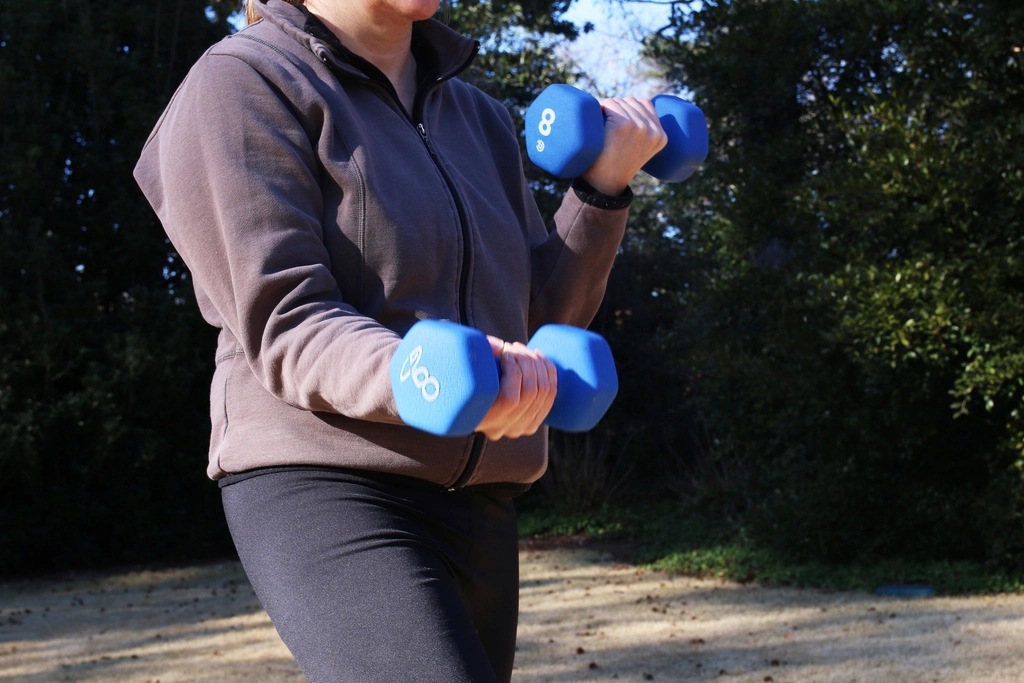
Strength work, for bone. It is the field’s finest demonstration. An Australian trial followed a hundred and one postmenopausal women, average age sixty-five, whose bone density was already compromised. Two supervised thirty-minute sessions a week, for eight months, at genuine intensity. The result: they gained bone density where the control group lost it — with nine women in ten completing the programme, and a single minor incident.
Two sessions a week. The point is not the volume: it is « supervised » and « at genuine intensity ».
Sleep support. Among a hundred and fifty postmenopausal women with insomnia, behavioural sleep treatment allowed more than half of them to return to normal sleep — against one in twenty-five with simple sleep hygiene advice. It is one of the widest gaps in this entire literature. It requires a trained practitioner: this is a partnership, not a menu line.
Regular movement, even modest. Among nearly nine hundred women followed for more than twenty years, even a slight increase in activity — walking above all — significantly slows bone loss at the hip.
To which is added a simple nutritional base: enough calcium and vitamin D, preferably from food, with routine supplementation not recommended when intake is sufficient.
The red line
It protects the guest as much as the house, and it deserves to be written in black and white into any programme.
Hormone therapy remains the most effective treatment for hot flushes, with the most favourable benefit-risk ratio in women under sixty or within ten years of menopause. The major 2024 reappraisal is equally clear: it should not be prescribed to prevent cardiovascular disease, cancer or dementia.
All of this is a matter for a physician. A wellness operator does not prescribe, does not dose, does not interpret a hormone panel, promises no « rebalancing » and does not sell menopause supplements. The Lancet series explicitly warns against over-medicalising the subject and against the influence of commercial interests: a house adopting that narrative would expose itself to the same criticism.
Knowing whom to refer to, and saying so clearly, is part of the product. It is a mark of seriousness, not an admission of limits.
What this changes for an operator
The journey is built on bone, muscle, sleep and energy — not on hot flushes. That is the decisive shift, and also the most defensible.
Two supervised strength sessions a week become the core of the offer. Which assumes qualified supervision, not open access to a gym.
Measurement changes. Body composition, strength, sleep quality, blood pressure: four useful markers, none requiring a hormone assay.
Medical referral is part of the journey, and is stated clearly from the first conversation.
And the market is there. In the United States, fewer than a third of gynaecology training programmes include dedicated menopause teaching, while more than nine programme directors in ten believe there should be one. Women of fifty and over now represent more than a quarter of the world’s female population.
A large, demanding clientele, insufficiently supported by medicine and poorly served by wellness. A house offering an honest journey today stands out immediately. In five years, it will have become the norm.
Read next: breath, strength, recovery — the three markers that tell your next decade.
Designing a journey dedicated to women’s health means deciding what belongs to the programme and what belongs to medicine. That is the work we do with our clients. Write to us, discover Guest Journey & Protocols or browse our services.
Further reading
- Menopause, its milestones and its management — Lancet series, 2024
- Body composition during the transition — SWAN cohort, JCI Insight, 2019
- Menopause and cardiovascular risk — American Heart Association, Circulation, 2020
- Strength training and bone density — LIFTMOR trial, Journal of Bone and Mineral Research, 2018
- Non-hormonal approaches to hot flushes — The Menopause Society position statement, 2023
- Hormone therapy: what it treats and what it does not prevent — reappraisal, JAMA, 2024
Popular Posts