Breath, strength, recovery: the three markers that tell your next decade
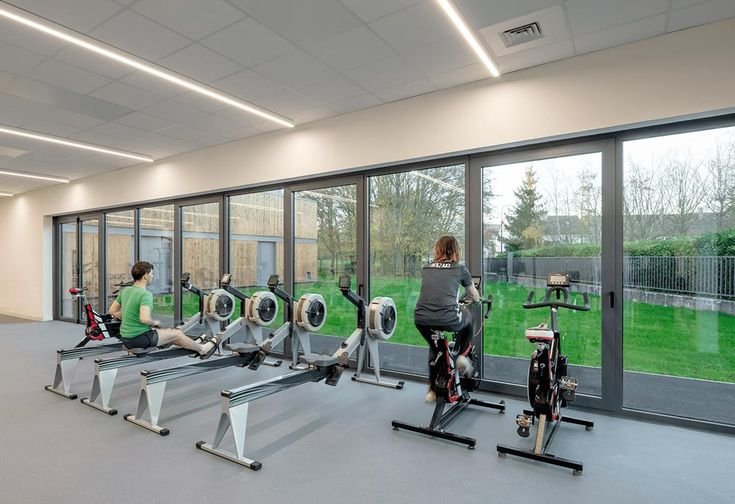
No wellness intervention rests on evidence as solid as movement. It is also the field where the gap between what science establishes and what the market sells has widened the most. Three markers that hold up, two beliefs that cost money, and one very concrete consequence for your guest journeys.
In short
- Cardiorespiratory fitness is the single strongest predictor of longevity: the fittest die about five times less than the least fit.
- More than half of the benefit is gained between the least fit group and the one just above it — your most sedentary guest has the most to gain.
- Grip strength predicts mortality better than blood pressure; 30 to 60 minutes of strength work per week is enough.
- Cold plunges taken straight after a strength session blunt muscle gains. Separate them by a few hours.
- Recovery scores from wrist or ring sensors drift about 17% against an ECG — a trend, not a diagnostic.
First marker: breath
The landmark study followed more than 120,000 Cleveland Clinic patients for about two decades. The result is one of the clearest in preventive medicine: people with the highest cardiorespiratory fitness die roughly five times less often than the least fit. In that same cohort, neither smoking nor diabetes weighs as heavily as poor physical condition.
Two nuances matter a great deal to an operator.
The first: no ceiling was observed. The higher the capacity, the further the benefit continues.
The second, and commercially decisive: according to the American Heart Association, more than half of the gain happens between the least fit group and the one immediately above it. In other words, the guest with the most to gain in your property is not the athlete who occupies the gym at seven in the morning. It is the exhausted executive who never sets foot in it. That is a sales argument as much as a medical fact.
And the order of magnitude is accessible: an analysis of fifteen international cohorts places the benefit plateau at around six to eight thousand steps a day after sixty, eight to ten thousand before. Walking is enough. Walking fast adds nothing more.
Second marker: strength
A study conducted across seventeen countries on nearly 140,000 people measured something very simple: the strength of the hand. The result surprised the medical community — grip strength predicts mortality risk better than blood pressure does.
And the required dose is surprisingly modest. Pooling sixteen large studies, the British Journal of Sports Medicine places the maximum benefit of resistance training between thirty and sixty minutes a week. Not per day. Per week. Beyond roughly two hours, it fades. Combined with walking or cardio, the whole reduces mortality by around 40%.
Thirty to sixty minutes weekly is two sessions. That fits inside a three-night stay, and inside the week of an overloaded executive.
Third marker: recovery, measured honestly
This is where caution is needed, because this is where marketing has run furthest ahead.
Sleep first. The industry’s most quoted study — college basketball players whose sleep was extended by nearly two hours, with a roughly 9% gain in shooting accuracy — rests on eleven players, with no comparison group. The effect is very probably real. The evidence does not carry the weight placed on it.
Heart rate variability next, the famous « recovery score » displayed by watches and rings. Two things are worth knowing. First, training programmes steered by that score have not outperformed conventional programmes in the available trials. Second, the measurement itself depends heavily on the sensor: compared with an electrocardiogram, a chest strap is off by about 2%, an optical wrist or finger sensor by about 17%. In practice, a modest day-to-day variation read on a watch is indistinguishable from measurement noise.
None of this forbids using these devices. They open the conversation, they make the guest attentive to themselves, they give a trend over several weeks. It does forbid turning them into an assessment.

Two beliefs that cost money
Zone 2. It has become the emblematic longevity intensity. Yet a 2025 review published in Sports Medicine, co-signed by one of the world’s leading training scientists, concludes that the data do not single it out as the optimal intensity — and identifies the original error: the habits of endurance athletes, who accumulate large volumes at both low and high intensity, were transposed onto the general public. What is established is that the fitness level reached protects. Not that one particular zone is the only road there.
The cold plunge straight after strength work. It is the sequence of almost every recovery circuit, and it is the one that causes a problem. Pooling eight trials, a 2024 meta-analysis shows that cold-water immersion practised immediately after a resistance session blunts muscle gains: cold dulls precisely the signal the effort has just triggered. On the broader benefits attributed to it — stress, immunity, mood — a review of eleven trials finds a calming effect that appears about twelve hours later and fades the following day.
Cold keeps its place entirely: recovery between two closely spaced efforts, soreness, and — this matters in hospitality — a strong, memorable sensory experience. What should not be done is to chain it to a session whose purpose is to build muscle.
On heat, the signal is more encouraging. A well-known Finnish cohort followed more than two thousand men for twenty years: those taking a sauna four to seven times a week died markedly less than those going once. This is an observation, in a single population, in a culture where the sauna is daily — to be quoted with that reservation. But the signal is there, and it is a beautiful one.
What this changes for an operator
The gym changes status. It stops being a mandatory amenity and becomes the best-documented space in the property — provided it is supervised: the benefit described above assumes guidance, not a key-card.
The entry marker changes. Measuring strength — a dynamometer, a sit-to-stand test — costs a few hundred euros and says more than the bioimpedance scale on which entire assessments are nonetheless built.
The commercial target changes. The most sedentary guest is the one for whom the gain is greatest. That can be said, and it can be sold.
The sequencing of journeys changes. Separate strength work and cold immersion by a few hours, or reserve cold for cardio days. It costs nothing: it is a matter of scheduling and team training.
And training becomes the tipping point. None of the above holds if the team keeps presenting cold, on the floor, as an accelerator of gains.
Read next: Nutrition and longevity — what replaces detox, the same evidence-first approach applied to food.
Our recommendation
- Audit the sequencing of your recovery circuit before investing in new equipment.
- Replace the bioimpedance scale with a grip dynamometer as the entry marker.
- Build the offer around the sedentary guest, not the athlete.
Our 360° Wellness Diagnostic assesses the coherence between your facilities, your protocols and what they can actually deliver. Request a diagnostic or explore our services.
Further reading
- Fitness and longevity — Cleveland Clinic study of 120,000 patients, JAMA Network Open, 2018
- Grip strength as a health marker — PURE study across 17 countries, The Lancet, 2015
- Resistance training dose — synthesis of 16 studies, British Journal of Sports Medicine, 2022
- Cold-water immersion and muscle gains — meta-analysis, European Journal of Sport Science, 2024
- Zone 2 — critical review, Sports Medicine, 2025
- Sauna and longevity — Finnish cohort, JAMA Internal Medicine, 2015
Popular Posts

(02) Comment
Stress, Sleep and Longevity: What a Wellness Centre Can Promise
September 21, 2026 - 12:13 AM[…] Read next: breath, strength, recovery — the three markers that tell your next decade. […]
Women’s Health: What a Wellness Centre Can and Cannot Offer
September 21, 2026 - 12:17 AM[…] Read next: breath, strength, recovery — the three markers that tell your next decade. […]