Why Your Spa is Losing Money (and How to Turn It Into a Strategic Profit Center)
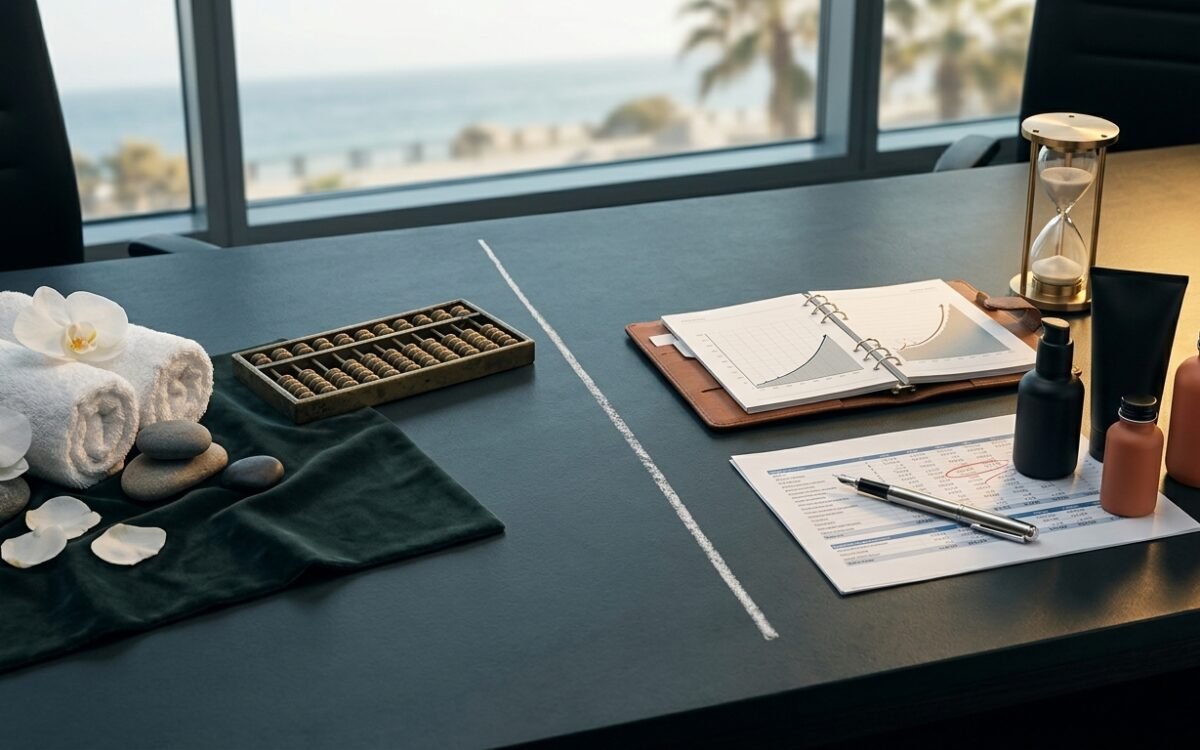
For decades, luxury hospitality has treated the spa as an essential amenity—a decorative line item designed to secure a 5-star rating rather than generate serious revenue. Owners invest heavily in custom marble, high-end equipment, and expansive real estate, only to watch the department operate at an annual deficit.
When a wellness facility loses money, management often defaults to standard fixes: discounting treatments, running ad-hoc promotions, or adding more catalog services to an already bloated menu.
These reactive steps rarely work because they address symptoms, not the underlying operational strategy. Turning a wellness department into a high-yielding revenue driver requires shifting from an amenity mindset to an outcome-led business model.
1. Eliminate Menu Bloat Through Strategic Rationalization
One of the primary drivers of low spa profitability is an overly complex menu. Offering dozens of competing treatments confuses guests, inflates inventory holding costs, and dilutes brand identity.
- Focus on Signature Outcomes: Replace repetitive 60-minute massage options with high-value signature protocols targeted at specific outcomes (e.g., Sleep Optimization, Deep Recovery, Stress Regulation).
- Maximize Inventory Margins: Eliminate low-yield treatments that require expensive, single-use products with short shelf lives. Retain high-margin services that rely on high-touch expertise and core retail partnerships.
- Simplify Selection for the Guest: A streamlined menu reduces choice paralysis, speeding up booking conversions and improving daily scheduling efficiency.
2. Shift Focus to Room Productivity Metrics
In luxury hotel operations, square footage is prime real estate. Measuring success strictly by total revenue or treatment count hides significant operational inefficiencies.
- Track REVPATH (Revenue Per Available Treatment Hour): Similar to REVPAR in hotel room management, REVPATH measures how effectively every treatment room generates income throughout operating hours.
- Optimize Treatment Room Sequencing: Restructure back-to-back scheduling to reduce turnover downtime between sessions, maximizing therapist utilization rates without sacrificing guest experience.
- Balance Peak vs. Off-Peak Capacity: Introduce dynamic pricing models and specialized morning/mid-week sequences to capture corporate or non-resident guests during traditionally slow hours.
3. Re-engineer Pricing Models for High-Margin Recurring Revenue
Relying entirely on a one-off treatment model limits lifetime guest value. To build a sustainable P&L, wellness operations must incorporate recurring revenue streams.
| Revenue Strategy | Traditional Amenity Approach | Strategic Profit Center Approach |
| Pricing Model | Fixed hourly rate based on local competition | Outcome-based value pricing tied to specialized protocols |
| Guest Journey | Single, isolated 60-minute session | Multi-session stay journeys & follow-up care packages |
| Retail Strategy | Passive shelf display at check-out | Consultative homecare integration driven by treatment outcomes |
| Membership Model | Non-existent or heavily discounted gym access | High-margin urban membership focused on stress regulation |
4. Train Teams for Consultative Value Selling
A wellness department cannot achieve financial recovery if the operational staff views sales as antithetical to care. Therapists and receptionists must be trained to serve as trusted wellness advisors.
- Consultative Guest Conversations: Train front-of-house teams to ask guests how they want to feel rather than what treatment they want to book.
- Integrated Homecare Prescriptions: Move away from aggressive retail tactics. Teach therapists to prescribe homecare regimens as an essential continuation of the treatment protocol.
- Align KPIs with Operational Goals: Set clear, transparent team targets around room productivity, retail sales mix, and repeat booking rates.
Transforming Performance Without Capital Renovation
Converting a loss-making spa into a high-margin profit center does not require expensive physical expansion or structural changes. In a recent 24-month restructuring assignment for a luxury 5-star palace hotel in Geneva, rationalizing the menu, revising pricing models, and retraining staff transformed an annual operating loss of CHF 300,000 into a CHF 100,000 net profit—with zero modification to the physical floor space.
When positioning, operational rigor, and sensory experience work in harmony, wellness stops being a cost line on your financial statement and becomes your property’s strongest brand lever.
Want to go further? Our spa turnaround and restructuring service applies this method on site, and the Geneva palace case study shows the results over 24 months. For wider market data, see the Global Wellness Institute research. Ready to discuss your property? Request a quote.
Popular Posts